How Much Does a Commercial Steel Building Cost in Texas? What Business Owners Actually Pay
Steel building cost is usually the first question business owners ask when planning a new commercial facility, and it’s also one of the hardest to answer with a single number. Pricing depends on size, finish level, site conditions, and building complexity, which is why two buildings of the same square footage can land at very different price points. Here’s a clear look at what actually drives commercial steel building cost in Texas, so you can set realistic expectations before requesting quotes.
What Factors Actually Drive Steel Building Cost
Rather than a flat price per square foot, commercial steel building cost is shaped by several variables working together:
- Building size and clear-span requirements – Larger spans without interior columns generally require heavier structural steel, which affects cost.
- Finish level – A basic warehouse shell costs less than an office/warehouse combination with insulation, interior build-out, and finished exteriors.
- Site conditions – Soil quality, drainage needs, and utility access all affect site preparation costs, which are separate from the building structure itself.
- Local code and wind/snow load requirements – Texas building codes and regional wind-load standards influence structural specifications and material requirements.
- Interior systems – Overhead cranes, mezzanines, specialized HVAC, or heavy equipment all add cost beyond the base structure.
- Permitting and engineering fees – These vary by jurisdiction and project complexity, and should be factored into the overall budget.
For a general sense of how these variables play out in published pricing ranges, this overview of metal building prices breaks down typical cost ranges by building type and size.
Why “Price Per Square Foot” Can Be Misleading
Price-per-square-foot figures are a useful starting point, but they rarely tell the full story. A simple storage building and a finished commercial office space may both be priced per square foot, but the underlying costs — insulation, interior finishes, HVAC, electrical — are completely different. The only reliable way to understand true project cost is through a detailed estimate based on your specific building use, site, and finish requirements.
What’s Typically Included in a Steel Building Estimate
A complete commercial steel building estimate generally accounts for:
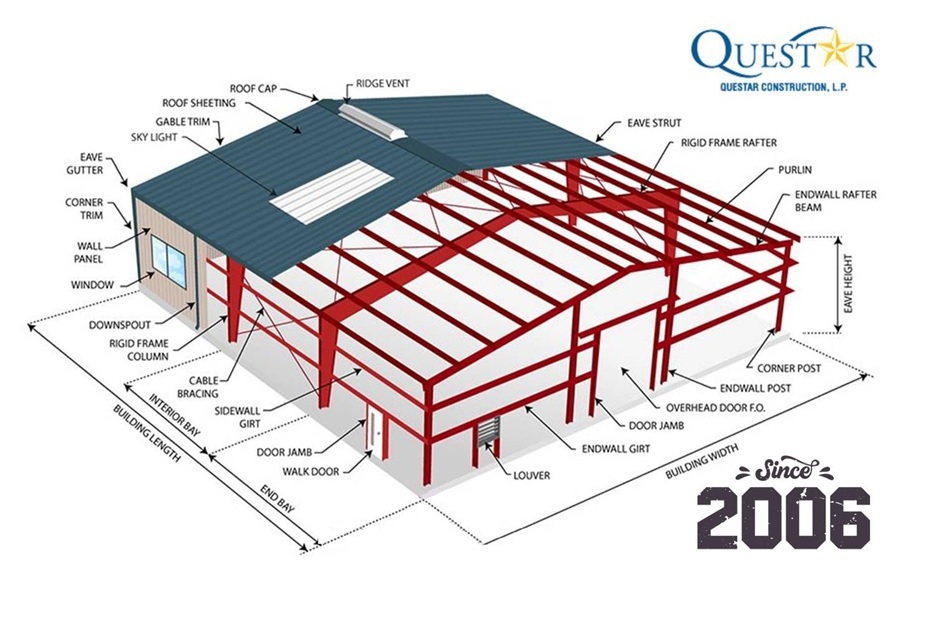
- Structural steel materials and engineering
- Foundation and concrete work
- Site preparation and utility connections
- Roofing, siding, doors, and windows
- Interior finish-out, if applicable
- Permitting and inspection fees
- Labor for erection and construction management
How Value Engineering Affects Cost
Value engineering is the process of identifying design and material choices that reduce cost without compromising structural integrity or long-term performance. This might mean adjusting a building’s layout to reduce structural steel needs, selecting more cost-efficient finish materials, or sequencing construction phases more efficiently. An experienced contractor applies value engineering throughout the design process, not as an afterthought once a budget runs over.
Getting an Accurate Estimate
The most reliable way to understand steel building cost for your specific project is to work directly with an experienced commercial contractor early in the planning process. A detailed, project-specific estimate accounts for your site conditions, intended use, and finish level — all of which generic pricing guides can’t fully capture.
Questar’s Approach to Cost and Value
Questar Construction applies value engineering throughout the design and construction process to help clients control costs without sacrificing quality, backed by decades of commercial construction experience across the Greater Houston area. Our turnkey approach means your budget covers design, engineering, site work, and construction under one coordinated team, reducing the risk of cost surprises between separate vendors. Explore the types of projects we deliver on our commercial steel buildings page, or reach out directly for a project-specific estimate.
Key Takeaways
- Steel building cost depends on size, finish level, site conditions, and local code requirements, not a single flat rate.
- Price-per-square-foot figures are a useful starting point but can be misleading without context on finish level and building use.
- A complete estimate includes structural materials, site work, utilities, finishes, and permitting fees.
- Value engineering helps control costs by optimizing design and material choices early in the planning process.
FAQ
What’s a rough starting point for commercial steel building cost? Pricing varies widely based on size, site conditions, and finish level, so it’s best to get a detailed estimate specific to your project rather than relying on general per-square-foot figures.
Does site preparation cost get included in building price quotes? Not always. Site work is often priced separately from the building structure itself, which is why it’s important to clarify what’s included in any quote you receive.
Can value engineering reduce cost without affecting quality? Yes. Value engineering focuses on optimizing design and material choices — not cutting corners — to control costs while still meeting structural and performance requirements.
Why do steel building cost estimates vary so much between contractors? Estimates can vary based on what’s included (site work, permitting, finishes), the contractor’s experience with similar projects, and regional material and labor costs.
Ready for an Accurate Estimate?
General pricing guides are a helpful starting point, but the only way to know your actual project cost is a detailed, project-specific estimate. Questar Construction can walk you through the numbers for your commercial steel building. Contact our team today to request your estimate.