Planning a Commercial Steel Building Project: A Step-by-Step Timeline From Concept to Keys
Searching for steel building contractors near me usually means you’re past the daydreaming stage and ready to understand what actually happens between “I need a building” and “here are the keys.” A commercial steel building project moves through several distinct phases, each with its own decisions, timelines, and potential pitfalls. Knowing that sequence ahead of time helps you set realistic expectations, avoid costly delays, and choose a contractor equipped to manage the whole process — not just one piece of it.
Key Takeaways
- A commercial steel building project moves through five core phases: feasibility, design and engineering, permitting, construction, and handoff.
- Permitting delays are one of the most common causes of schedule slippage — local code familiarity matters.
- A design-build, turnkey approach reduces handoffs between firms and keeps the project accountable to one team.
- Questar Construction manages the full project lifecycle in-house through trusted partners, from concept through keys.
Phase 1: Concept and Feasibility
Every project starts with a question: is this site, budget, and building concept actually workable together? During this phase, you’ll typically:
- Define your intended use, square footage, and must-have features
- Evaluate potential sites for zoning, utilities, and access
- Get a preliminary budget range from an experienced contractor
- Identify any obvious red flags (flood zones, easements, access restrictions)
This is also the point where working with a turnkey contractor pays off — instead of juggling separate conversations with architects, engineers, and site consultants, you get one coordinated read on feasibility.
Phase 2: Design and Engineering
Once feasibility is confirmed, the project moves into design. For pre-engineered steel buildings, this phase includes:
- Architectural design and space planning
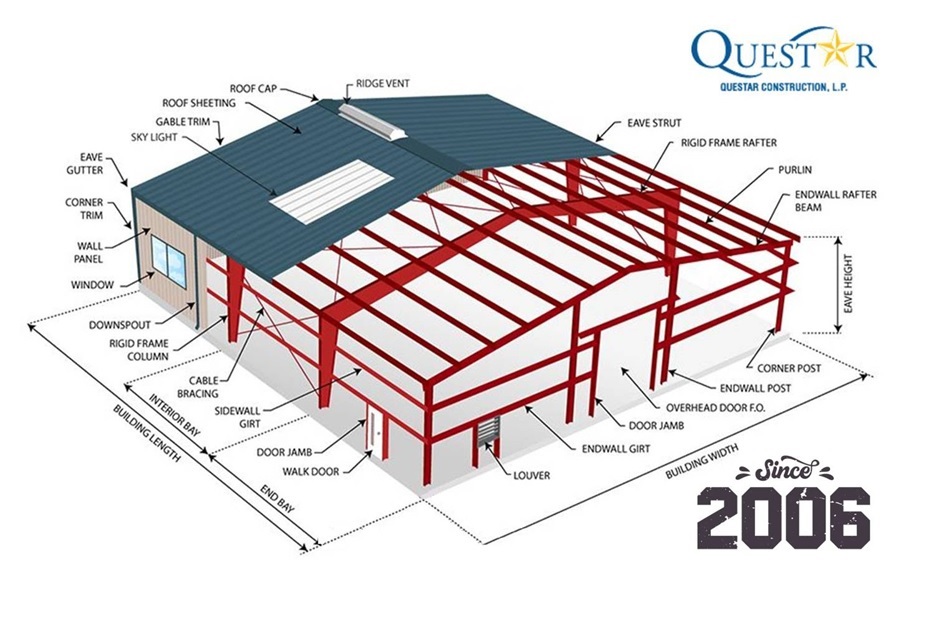
- Structural engineering specific to the steel building system
- Civil engineering for site grading, drainage, and utilities
- Coordination between design and construction teams to keep the project buildable within budget
A design-build approach — where design and construction are managed together rather than handed off between separate firms — typically shortens this phase and reduces the risk of costly redesigns later.
Phase 3: Permitting and Approvals
Permitting is often where commercial projects lose the most time, especially for contractors unfamiliar with local jurisdictions. This phase involves:
- Submitting engineered drawings for plan review
- Securing site development and building permits
- Coordinating with local fire marshals, utility providers, and inspectors
- Addressing any plan review comments or required revisions
Deep familiarity with local codes and inspectors — particularly in North Houston and Montgomery County — can meaningfully shorten this phase and prevent avoidable delays.
Milestone Timeline: Steel Building Contractors Near Me and What They Actually Manage
A contractor worth hiring should be able to walk you through what happens at each of these milestones, not just quote a price:
- Site development begins – grading, utilities, and foundation work start once permits are approved.
- Steel erection – the building frame goes up, typically one of the fastest visible phases of a pre-engineered building project.
- Building envelope completion – roofing, siding, doors, and windows are installed to close in the structure.
- Interior build-out – electrical, plumbing, HVAC, and finish work are completed based on the building’s intended use.
- Final inspections – local authorities sign off on the completed structure.
- Handoff and occupancy – keys are turned over and the building is ready for operation.
Phase 4: Construction Management and Oversight
Throughout construction, proactive project management keeps budgets, schedules, and subcontractor coordination on track. This includes regular progress updates, budget tracking against the original estimate, and quality control inspections at key stages — so surprises are caught early rather than at final walkthrough.
Phase 5: Final Handoff
The last phase includes final inspections, punch-list completion, and formal handoff of the building. A true turnkey contractor manages this transition so you’re stepping into a finished, functional building rather than coordinating a list of unfinished items yourself.
Why Questar’s Turnkey Approach Matters
Questar Construction manages every phase above under one roof — architectural design, civil and structural engineering, permitting, construction, and final handoff — through trusted professional partners and decades of hands-on experience in the Greater Houston area. As JLL has noted in its analysis of why turnkey projects are so successful, single-point accountability reduces risk and keeps projects on schedule. That’s the same principle behind our approach: one team, one point of contact, and a building delivered the way it was planned.
FAQ
How long does a typical commercial steel building project take? Timelines vary based on size, site conditions, and permitting complexity, but pre-engineered steel buildings generally move faster than conventional construction once permits are secured, thanks to standardized components and efficient erection.
What’s the benefit of a turnkey construction approach? A turnkey approach means one contractor manages design, engineering, permitting, and construction under a single point of accountability — reducing miscommunication between separate firms and helping keep budgets and schedules on track.
Do I need separate architects and engineers, or does the contractor handle that? With a design-build or turnkey contractor like Questar, architectural design, civil engineering, and structural engineering are coordinated through trusted partners as part of the overall project, so you aren’t managing multiple separate contracts yourself.
What causes the most delays in commercial construction projects? Permitting and plan review are common culprits, especially when a contractor isn’t familiar with local jurisdictions. Site conditions, weather, and material lead times can also affect the schedule.
Ready to Start Your Project?
If you’re comparing steel building contractors near me, Questar Construction offers a fully managed, turnkey path from concept through keys. Contact our team today to schedule a project consultation.