Commercial Construction in Montgomery County TX: Permits, Codes, and What to Expect
Montgomery County continues to attract new businesses, and many owners are choosing to build their own facilities there. Before any steel goes up, though, you need the right commercial building permits, and in Montgomery County the path depends heavily on where your site sits. A lot inside Conroe city limits follows a different process than one a few miles away in an unincorporated part of the county. Here is who reviews commercial projects, which codes apply, which state requirements to plan for, and what to expect from submittal to occupancy.
Who Issues Commercial Building Permits in Montgomery County?
It depends on whether your site is inside a city or in an unincorporated area. Cities such as Conroe, Willis, Montgomery, and Magnolia run their own permitting and enforce their own adopted codes. In unincorporated areas, Montgomery County handles permits through its Permit Department, and the Fire Marshal’s Office reviews commercial plans.
| Site Location | Who Reviews Your Project | What to Expect |
|---|---|---|
| Inside city limits | The city’s building or development department | Building permit, plan review, and inspections under the city’s adopted codes, plus any zoning or site plan rules. |
| Unincorporated Montgomery County | Montgomery County Permit Department and Fire Marshal’s Office | County permits and a fire code plan review, final inspection, and Certificate of Compliance before occupancy. |
| Near a city’s edge (ETJ) | Possibly both the county and the nearby city | A city may apply its platting or subdivision rules in its extraterritorial jurisdiction, so confirm early. |
Texas counties have more limited land-use authority than cities. They can set certain safety and drainage standards, but they generally cannot zone where development happens. That is one reason the unincorporated county is attractive for many commercial projects, and also why the fire code review carries so much weight there.
What Codes Apply to Commercial Buildings in Unincorporated Montgomery County?
Montgomery County has adopted the 2018 International Fire Code as its county fire code. Under state law, that code applies to commercial establishments, public buildings, and multifamily buildings with four or more units built in unincorporated areas. Industrial facilities with an OSHA-compliant fire brigade are excluded.
The fire code shapes more of a commercial building than many owners expect. It affects fire lane access, building separation, exits, fire alarm and sprinkler requirements, and how materials can be stored inside. A warehouse with high racking, for example, can trigger more fire protection requirements than a simple office building of the same size.
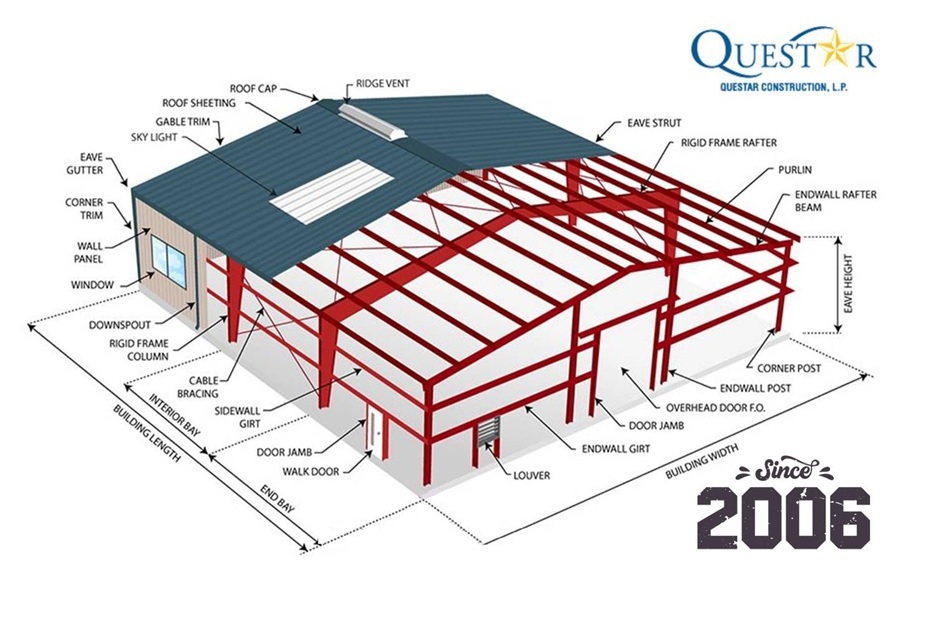
Structural design still matters even where the county does not run a full building code program. Questar designs buildings to meet International Building Code wind and load requirements, so the structure is engineered for Gulf Coast conditions no matter which jurisdiction reviews the plans.
How Does the Montgomery County Fire Code Review Work?
All county permits go through the Permit Department, which the county describes as a one-stop permit shop. The Fire Marshal’s Office then reviews the plans. State law gives the county 30 days to approve or reject plans, and the Montgomery County Fire Marshal’s Office notes that reviews typically take 7 to 10 days.
- Submit the application and plans to the Montgomery County Permit Department.
- Plan review by the Fire Marshal’s Office.
- Comments letter sent by email; you reply to accept the stated conditions, and the permit is approved on that basis.
- Construction and inspections, with fire protection systems handled as deferred submittals.
- Final inspection request, signed and stamped by the architect or engineer if they designed the approved plans.
- Final inspection, generally scheduled within 7 to 10 business days after the project is released for final.
- Certificate of Compliance, issued once the final inspection passes with no violations and the Emergency Response Information form is submitted. You need it before you occupy the building.
Smaller projects in existing permitted buildings, or changes in occupancy, may qualify for an express fire code review instead of a full plan review.
Which State Requirements Apply to Commercial Construction?
Several state requirements apply whether your site is in a city or the unincorporated county. The three that come up most often for commercial steel buildings involve stormwater, accessibility, and modular components.
- Stormwater: The Texas Commission on Environmental Quality (TCEQ) regulates construction sites that disturb one acre or more, including smaller sites that are part of a larger development plan. A stormwater pollution prevention plan must be in place before construction starts, and TCEQ treats 1-to-5-acre sites and sites over 5 acres differently.
- Accessibility: The Texas Department of Licensing and Regulation (TDLR) requires projects with an estimated cost of $50,000 or more to be registered and to submit construction documents for review by a Registered Accessibility Specialist. Smaller projects still have to meet the Texas Accessibility Standards.
- Modular components: If the project includes industrialized or modular buildings or components, such as a modular office unit, TDLR’s industrialized buildings program requires either a registered industrialized builder or a commercial installation permit.
Depending on the site, you may also need floodplain, driveway, utility, or on-site septic approvals, so it pays to confirm the full list during design.
What Usually Slows Down Commercial Permits Here?
Most delays come from small gaps that add up: confusion over which jurisdiction a site falls under, drainage or floodplain questions, incomplete fire protection information, and site plans that don’t match the building drawings. Ordering steel before approvals are in hand can also create costly rework if plans change during review.
We cover the most common permitting delays and inspection stages in more depth in our post on permits and codes in North Houston.
What Should You Expect From Start to Occupancy?
A typical commercial project in Montgomery County follows the same general path. Knowing it up front helps you set a realistic move-in date.
- Confirm jurisdiction: city, ETJ, or unincorporated county.
- Complete survey, geotechnical testing, and engineering.
- Prepare and submit plans, plus TCEQ and TDLR filings as needed.
- Respond to review comments and receive approvals.
- Build, with inspections at each stage.
- Pass final inspection and receive the Certificate of Compliance or certificate of occupancy.
Why Local Experience Matters for Montgomery County Projects
Permitting goes faster when your contractor already knows the local process, the reviewers, and the paperwork each agency expects. Questar Construction is based in Conroe and has been building turnkey steel buildings across the Greater Houston area since 2006, backed by a family business that has served the region since 1972. We coordinate architectural, civil, and structural engineering through our professional partners and manage permitting as part of our turnkey service. See the types of projects we build on our commercial steel buildings page.
Key Takeaways
- Who reviews your commercial building permits in Montgomery County depends on whether the site is in a city, a city’s ETJ, or the unincorporated county.
- Unincorporated Montgomery County has adopted the 2018 International Fire Code for commercial buildings, and the Fire Marshal’s Office reviews plans.
- County plan reviews typically take 7 to 10 days, and a Certificate of Compliance is required before occupancy.
- State requirements from TCEQ and TDLR apply to many commercial projects regardless of location.
- Working with a local turnkey contractor helps you avoid the most common permitting delays.
FAQ
Do I need a building permit in unincorporated Montgomery County? Commercial projects in unincorporated Montgomery County go through the county Permit Department and require a fire code plan review by the Fire Marshal’s Office, along with any other county permits the site needs. Requirements vary by project, so confirm them early in design.
How long does a commercial plan review take in Montgomery County? State law gives the county 30 days to approve or reject plans, and the Fire Marshal’s Office says reviews typically take 7 to 10 days. Complete, well-coordinated plans help avoid extra review rounds.
What is a Certificate of Compliance? In unincorporated Montgomery County, it is the document issued after a commercial building passes its final fire code inspection with no violations. You need it before occupying the building.
Does my project need a TCEQ stormwater permit? If construction will disturb one acre or more, or the site is part of a larger development that will, TCEQ’s construction stormwater requirements apply, including a stormwater pollution prevention plan before work begins.
Planning a Commercial Project in Montgomery County?
Getting permits right from the start keeps your project on schedule. Questar Construction handles design, engineering coordination, permitting, and construction under one contract. Contact us for a quote or call (936) 321-5747 to discuss your project.