Value Engineering a Steel Building: How to Cut Costs Without Cutting Quality
In commercial construction, controlling costs without compromising performance is one of the biggest challenges owners face. That’s where value engineering becomes essential. When applied correctly, value engineering allows us to strategically reduce construction expenses while maintaining structural integrity, functionality, and long-term durability. For steel building projects in Houston and throughout the Greater North Houston area, this approach can significantly improve overall return on investment.
Value engineering is not about cutting corners. It is a systematic method of improving the “value” of a project by analyzing function and identifying more efficient ways to achieve the same performance goals. In steel construction, that process can lead to meaningful savings without sacrificing quality.
What Is Value Engineering in Steel Construction?
In the context of commercial steel buildings, value engineering means evaluating materials, design elements, construction methods, and scheduling to eliminate unnecessary costs while preserving strength and longevity.
At Questar Construction, we apply value engineering early in the planning phase so adjustments can be made efficiently. Whether we’re building warehouses, industrial facilities, or commercial spaces, our goal is to maximize performance per dollar invested.
If you’d like to explore the types of steel facilities we deliver, you can learn more about our commercial steel buildings and how they’re designed for durability and long-term success.
The Value Engineering Process: Step by Step
A structured process ensures cost savings are strategic.
- Define Project Goals Clearly
We begin by understanding how the building will be used. Clear-span requirements, loading capacity, insulation needs, and future expansion plans all impact design decisions. - Analyze Structural Systems
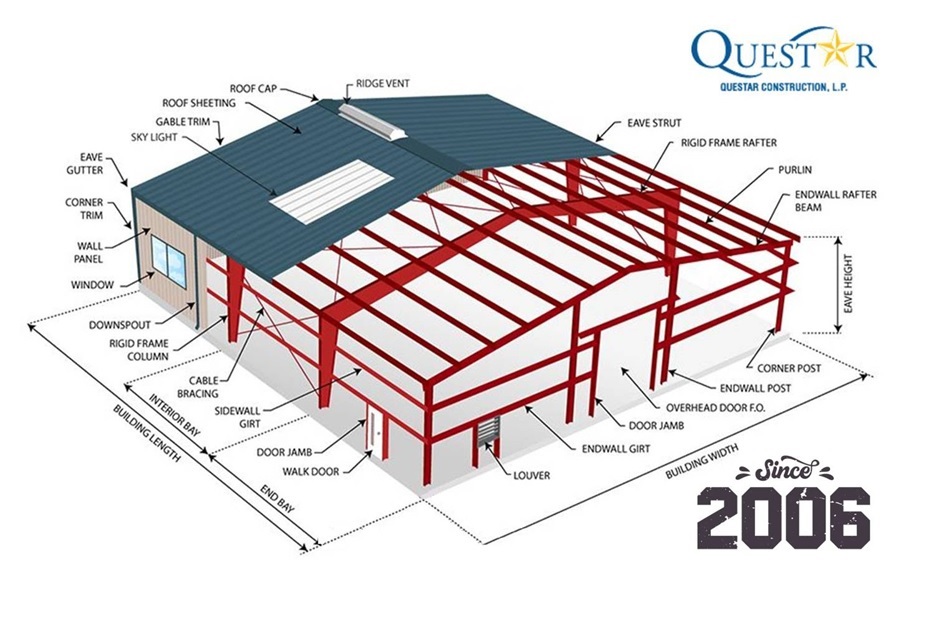
Steel framing systems can often be optimized without reducing performance. Adjusting bay spacing, framing configurations, or secondary members can lower material costs while maintaining structural integrity. - Evaluate Materials
We compare material options for roofing systems, insulation packages, wall panels, and finishes to find cost-efficient solutions that still meet durability and energy requirements. - Review Design Efficiency
Simplifying building geometry, reducing unnecessary architectural features, and aligning structural grids can minimize fabrication complexity. - Optimize Scheduling
By coordinating fabrication, site work, and steel delivery efficiently, we reduce labor hours and prevent costly downtime. - Confirm Long-Term Performance
Every decision is evaluated not just for upfront savings, but for lifecycle cost impact.
Common Cost-Saving Opportunities in Steel Buildings
Through value engineering, we frequently identify savings in areas such as:
- Optimizing structural steel tonnage
- Adjusting building dimensions to align with standard steel spans
- Selecting energy-efficient insulation systems
- Reducing unnecessary custom fabrication
- Simplifying roof slopes and wall transitions
- Coordinating site development and foundation design early
- Streamlining subcontractor sequencing
Each of these decisions can contribute to better overall cost control while preserving the building’s strength and usability.
Real-World Examples of Strategic Savings
For warehouse projects, adjusting column spacing to better match standard steel fabrication sizes can significantly reduce steel waste. In industrial buildings, selecting insulated metal panels instead of more complex exterior systems can shorten installation time while improving energy efficiency. Even coordinating concrete foundation design with steel anchoring systems early can prevent costly redesigns later.
These changes may seem small individually, but collectively they can have a major financial impact.
Frequently Asked Questions About Value Engineering
- Does value engineering mean cheaper materials?
No. It focuses on smarter design and material selection—not lower quality. The goal is efficiency, not compromise. - Will my building be less durable?
Not when executed properly. All structural and code requirements remain fully intact. - When should value engineering begin?
The earlier, the better. Implementing value engineering during initial planning provides the most flexibility and savings potential.
Why Early Planning Makes the Difference
The key to successful value engineering is early collaboration. Once drawings are finalized and materials ordered, opportunities for meaningful cost adjustments shrink. By involving an experienced commercial steel contractor early in the process, we can evaluate options before they become costly changes.
At Questar Construction, we combine decades of commercial construction experience with practical, real-world solutions that protect your budget without compromising your building’s performance.
If you’re planning a steel building project in Houston or the surrounding area, now’s the time to start the conversation.
Contact our team today to schedule a consultation and learn how early value engineering can maximize your investment while delivering the quality your business depends on.